
Achieving Excellence In TVET Systems: A WorldSkills Champion's View
Reflections from WorldSkills Conference 2024 on TVET excellence, skills competitions, apprenticeships, partnerships, and the role of young people.

Excellence in Technical and Vocational Education and Training (TVET) needs three things. Skills competitions set a clear standard. Apprenticeships bring learning into real companies. Partnerships keep industry, government, and education aligned. Young people also need a voice. They are the learners the system serves, and they can show whether it is working.
What excellence in TVET actually means
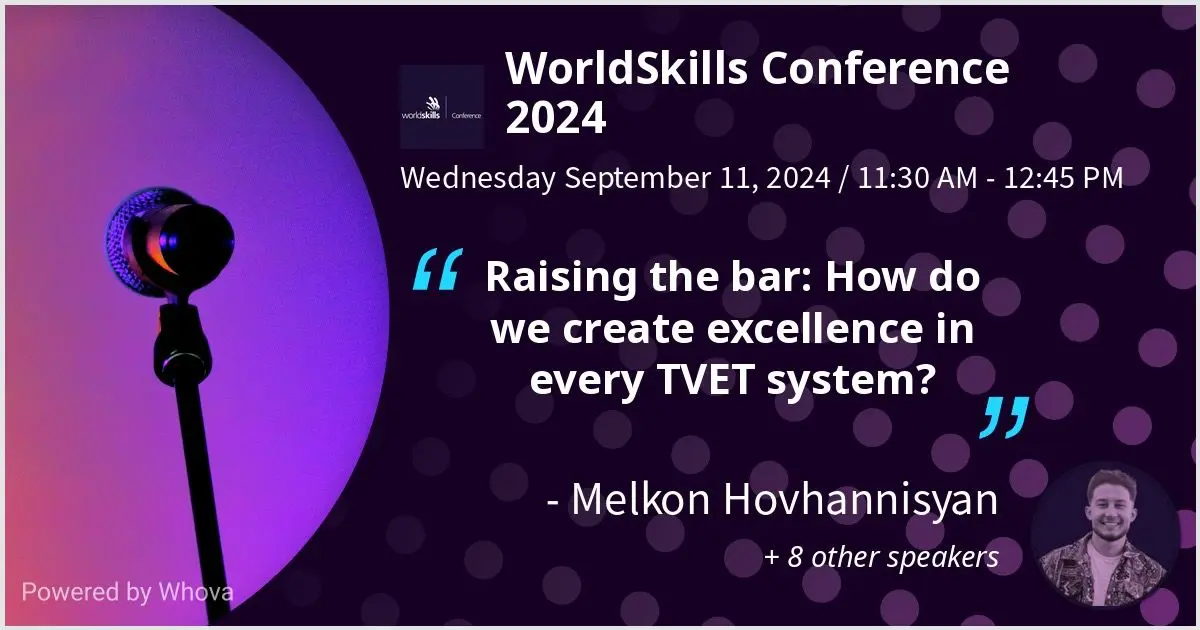
I was honored to speak at WorldSkills Conference 2024. The panel focused on TVET excellence and the future of vocational education.
TVET is often treated as a backup option. That framing is outdated, and it holds economies back.
Excellence in TVET is not about more certificates. It is about training that maps to real work. Employers should trust the qualification, and young people should see a real career path.
Why skills competitions matter
Skills competitions are underrated. Competing at WorldSkills changed how I understood my field.
The standard was concrete, visible, and compared with the best in the world.
Competitions raise ambition. They also raise the status of technical careers. They show which training methods produce real mastery.
Apprenticeships: learning by doing
Classroom learning sets the foundation. Skill grows when people do the work.
Apprenticeships put learning inside real companies. Students face real deadlines, quality standards, and consequences.
For young people, an apprenticeship turns theory into experience. For employers, it creates a talent pipeline trained to real standards.
Strategic partnerships across industry, government, and education
The clearest theme from the panel was simple: no group can deliver excellence alone.
Industry knows which skills are in demand. Government sets policy, funding, and standards. Education turns that into curriculum and teaching.
When these groups work alone, the system drifts. Training can lag behind real demand. Partnerships keep everyone working from the same picture.
Where young people fit in
The point I most wanted to make is that young people should help design the systems built for them.
They are not just learners. They are also the clearest signal of whether the system works.
Young people can show which parts of a curriculum feel disconnected from real work. They can also explain what motivates effort and how work is changing.
What comes next
Vocational education is part of a bigger question. How do we create opportunity while giving economies the skills they need?
TVET has real potential to widen access to good careers. It can also support innovation.
The work now is practical. Connect competitions to clear next steps. Scale apprenticeships with real employer partners. Keep young people at the table.
Key Takeaways
Excellence in TVET means training that maps directly onto real, in-demand work.
Skills competitions like WorldSkills set a visible standard and raise the prestige of technical careers.
Apprenticeships build skill by doing and close the gap between education and the labor market.
Industry, government, and education must partner so training tracks real demand.
Young people should help design TVET systems, not just receive them.
Frequently asked questions
What does TVET stand for?
TVET stands for Technical and Vocational Education and Training. It prepares people for skilled trades, technical roles, and applied professions. It often mixes classroom learning, hands-on practice, and workplace experience.
What makes a TVET system excellent?
An excellent TVET system aligns three forces: skills competitions, apprenticeships, and partnerships. Excellence shows up when graduates use their skills at work and employers trust the qualification.
Why do skills competitions matter for vocational education?
Skills competitions like WorldSkills make excellence visible. They give young people a clear benchmark. They also raise the prestige of technical careers and show which training methods work.
How do apprenticeships fit into TVET?
Apprenticeships connect learning to real work. Young people gain company experience. Employers get talent trained to real standards. The gap between school and work gets smaller.
What role can young people play in shaping TVET?
Young people are not only learners. They are also a clear feedback signal. Involving them in policy, competitions, and program review keeps training relevant.
Related articles
Comments
Be the first to comment.